


The GW Technology Commercialization Office (TCO) is proud to announce the recipients of the Technology Maturation Awards (TMAs) for Fall 2025. The TMAs support promising GW inventions that demonstrate strong potential for societal benefit and commercial impact.
This spring, the GW TCO awarded TMAs to four innovative technologies spanning the life sciences and physical sciences. Each project received up to $50,000 in internal research funding to advance development through proof-of-concept, prototyping, technology development, and scale-up activities. This support is intended to help the teams validate commercial feasibility, engage experienced partners, and move their technologies closer to market readiness.
- Dr. Alberto Bosque - A Novel Potent Latency Reversing Agent Towards Elimination of HIV Reservoirs
- Image
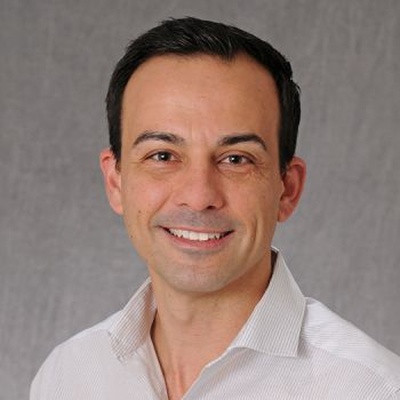
Dr. Alberto Bosque has groundbreaking work on a novel latency‑reversing agent (LRA) designed to eliminate HIV reservoirs. The TMA award will enable him to identify the cellular target, optimize drug properties, and prepare for preclinical studies. This could become a safer, more effective latency‑reversing agent that could transform HIV cure strategies and improve the lives of millions worldwide. We look forward to seeing this idea set a new benchmark in the fight against HIV.
- Dr. John R. Bethea & Dr. Kayla L. Nguyen - ERO1α Inhibition for Multiple Sclerosis Therapeutics
- Image

Dr. John R. Bethea and Dr. Kayla L. Nguyen developed an approach designed to prevent motor impairment, chronic pain, and cardiorenal dysfunction in multiple sclerosis (MS). In preclinical models, ERO1alpha inhibition has shown sex‑specific efficacy. This work builds on GW’s patented platform targeting ER redox/protein‑folding stress and will be advanced through the TMA award to optimize drug analogues, validate biomarkers, and expand in vivo studies.
- Dr. Michael Keidar - Non-Invasive Plasma Discharge Tube Device for Treating Brain Tumors
- Image

Dr. Michael Keidar and team has pioneered an innovative Plasma Discharge Tube (PDT) helmet system – a non-invasive device designed to enhance glioblastoma therapy. Glioblastoma remains one of the most aggressive brain cancers, with limited treatment options and significant side effects. This innovation has the potential to improve patient outcomes, reduce toxicity, and dramatically increase treatment compliance. This work builds on GW’s patented plasma medicine technologies and will be advanced through the TMA award to optimize helmet design, refine treatment protocols, and prepare for preclinical validation. Partnerships with leading cancer centers, including Duke University’s Preston Robert Tisch Brain Tumor Center, will accelerate translation toward clinical trials.
- Dr. Chung Park - Robot-aided system and Method for Diagnosis of Autism Spectrum Disorder
- Image

GW researcher Dr. Chung Hyuk Park pioneered a companion robot powered by AI to detect challenging behaviors in children with neurodevelopmental disorders, including autism. The project introduces a first-of-its-kind solution: a friendly robot integrated with a multimodal AI framework capable of real-time monitoring, which promises to transform autism care. This award will accelerate development of a market-ready prototype by funding advanced AI model refinement.